Rail–Sea Synergy for Trans-Eurasian Connectivity: How China–Europe Rail Services and Maritime Shipping Build Supply-Chain Resilience under Geopolitical and Green Transition Pressures
YANG Xianxiang Affiliations & Notes
Executive Director & Chairman of SITC International Holdings Co., Ltd.
This article argues that China–Europe rail services and maritime shipping should be understood not as substitutes, but as complementary components within an integrated trans-Eurasian logistics system. In the context of geopolitical uncertainty, chokepoint vulnerabilities, and accelerating green transition pressures, the practical value of rail–sea synergy depends less on the expansion of physical infrastructure than on the institutional rules that render routing flexibility operationally viable. These rules are concentrated at critical interfaces—ports, dry ports, and border hubs—where customs procedures, documentation continuity, data interoperability, and capacity allocation determine whether cargo can transition between modes without incurring costly disruptions.
The article proposes an initiative-agnostic governance toolkit comprising corridor performance platforms, a "one dataset, multiple uses" approach to customs facilitation, interoperable multimodal documentation, standards-anchored data governance, transparent capacity allocation protocols, and harmonised corridor-level emissions accounting. A stress test based on three disruption scenarios demonstrates how this toolkit mitigates cascading failures and enhances system performance, particularly under tail-risk conditions.
Keywords :
Trans-Eurasian Connectivity; Eurasian Logistics Networks; Supply-chain Resilience; Corridor Governance
1. Framing: From "Rail vs Sea" to a Trans-Eurasian Synergy System
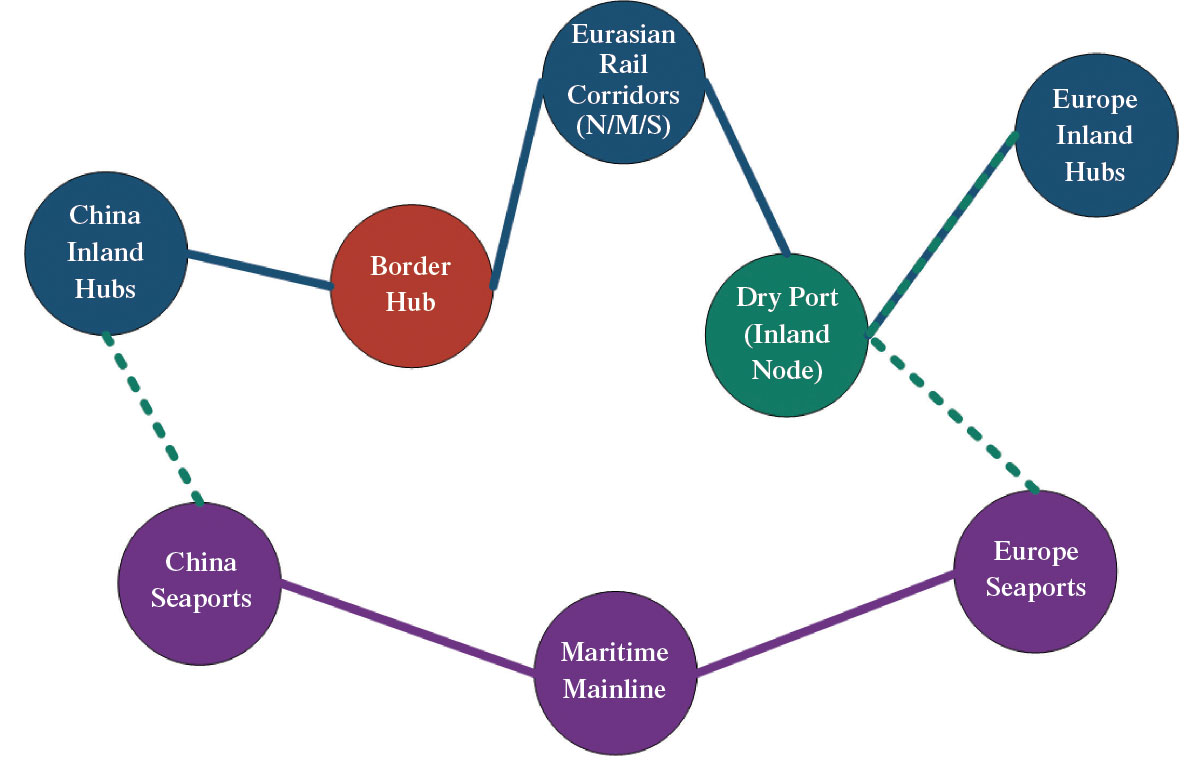
The prevailing public narrative continues to frame rail and maritime transport as competitors operating along a single China–Europe corridor. Such a perspective is increasingly inadequate for decision-makers tasked with ensuring cargo continuity under conditions of disruption, maintaining cross-jurisdictional compliance, and meeting intensifying environmental expectations from both customers and investors. A trans-Eurasian logistics system is not merely a linear connection between endpoints; rather, it constitutes a portfolio of routing options interconnected through critical control points, where institutional rules and operational coordination determine whether redundancy can be translated into actual service continuity.
This article presents a strategic and operational governance analysis intended for senior stakeholders in shipping, port management, rail logistics, freight forwarding, and trade facilitation. It does not seek to model modal competition or to determine the relative efficiency of rail versus maritime transport. Instead, its objective is threefold: to clarify the operational meaning of rail–sea synergy; to identify the institutional and operational loci where such synergy is either enabled or undermined; and to propose a governance toolkit capable of enhancing systemic resilience independent of specific policy branding.
Although many corridor investments are frequently associated with the policy framework of the "Belt and Road Initiative," the operational challenges examined here extend well beyond any single geopolitical or institutional context. Accordingly, this article adopts the more neutral and globally accessible terminology of trans-Eurasian connectivity and Eurasian logistics networks, while acknowledging the broader policy backdrop only as contextual reference (World Bank, 2019).
Within this framework, rail–sea synergy is defined in explicitly operational terms. Synergy exists when cargo can be dynamically allocated between maritime routes and China–Europe rail services—and can switch between them in response to changing conditions—without triggering predictable failure mechanisms. These failure mechanisms include documentary discontinuities that necessitate re-declaration or re-issuance of transport documents; fragmentation of data systems leading to loss of end-to-end visibility; unpredictable border dwell times arising from inconsistent risk management practices; and capacity lock-outs resulting from opaque or inflexible rebooking rules.
When such failures occur, redundancy remains merely theoretical rather than functional. Conversely, when these constraints are effectively managed, rail and maritime transport operate as complementary assets, generating resilience through option value rather than direct substitution. In this sense, synergy extends beyond the mere absence of disruption: it denotes the system's capacity to convert route diversity into measurable service continuity, thereby rendering the overall corridor more reliable than any individual mode in isolation.
The central argument of this article is therefore that trans-Eurasian supply-chain resilience depends fundamentally on institutional interoperability. This encompasses predictable customs facilitation, continuity of documentation across regulatory regimes, standards-based data exchange, and transparent capacity allocation mechanisms. While infrastructure development remains necessary, it is governance that ultimately determines whether such infrastructure can be recombined into viable operational pathways under conditions of stress.
The remainder of the article is structured as follows. It first examines the strategic urgency of rail–sea synergy in light of geopolitical volatility and green transition imperatives. It then analyses the decisive role of interface nodes—ports, dry ports, and border hubs—as key governance control points. Subsequently, it outlines the proposed governance toolkit, addresses environmental standards as a corridor-level governance challenge, and stress-tests the framework against three disruption scenarios. The article concludes with an implementation roadmap.
Figure 1. Trans-Eurasian logistics as a multimodal system: rail corridors, maritime corridors, and interface nodes (Source: Author design and rendering [conceptual]) (Rail corridors [blue], maritime mainline [purple], interface nodes [green dashed]).
2. Why Synergy Is Now Strategic: Geopolitics, Resilience, Cost–Time Trade-offs, and the Green Transition
Resilience is frequently invoked but rarely specified. In the context of a trans-Eurasian freight system, resilience can be analytically decomposed into three interrelated dimensions: redundancy, robustness, and adaptability. Redundancy refers to the existence of alternatives—multiple routes, nodes, and transport modes. Robustness denotes the capacity to maintain stable performance under stress, particularly through the control of variance at borders and terminals. Adaptability captures the system's ability to reconfigure rapidly, which can be operationalised through switching friction: the time and procedural complexity required to reroute cargo without disrupting documentary and data continuity.
This decomposition is important because it clarifies why governance—rather than network geography alone—has become the binding constraint on corridor performance. A corridor may remain vulnerable even when physical alternatives exist if switching is administratively costly or politically sensitive. Geopolitical uncertainty reshapes the operational environment through regulatory restrictions, reputational constraints, and the uneven implementation of border controls. These factors do not merely increase average costs; more critically, they increase variance. In logistics systems, variance is often more damaging than mean cost because it necessitates larger inventory buffers, disrupts production schedules, and amplifies working capital requirements. A resilient system therefore prioritises the reduction of tail risks, observable in P90 and P95 performance metrics, rather than focusing solely on averages.
The case for rail–sea synergy is further reinforced by long-run demand fundamentals. Maritime transport remains the backbone of international trade. The United Nations Conference on Trade and Development (UNCTAD) estimates that around 80 percent of the volume of global trade in goods is transported by sea, with even higher shares in many developing countries. Maritime trade is expected to continue expanding, with UNCTAD projecting growth of approximately 2.4 percent in 2023 and more than 2 percent annually in the medium term from 2024 to 2028 (UNCTAD, 2023).
In parallel, China–Europe rail services have expanded rapidly as an intermodal niche. Annual volumes have grown from 298 block trains in 2014 to more than 17,000 trains by 2023—a sustained expansion that reflects structural demand for diversified logistics options rather than temporary modal (Wagener et al., 2020). These figures do not imply modal substitution; rather, they indicate that both maritime and rail systems have reached significant scale, shifting the strategic question toward how their interaction should be governed.
A cost–time portfolio perspective further clarifies this interaction. Maritime transport provides scale and cost efficiency for baseline flows, while rail offers speed for time-sensitive cargo and can serve as a hedge when maritime routes experience delay inflation. However, the value of this portfolio depends critically on the ability to allocate and reallocate cargo without triggering cascading penalties at modal interfaces. When documentation must be rewritten, data re-entered, customs procedures restarted, or capacity reallocated informally, the portfolio collapses into ad hoc crisis management. By contrast, when institutional rules are designed to preserve continuity, rail and maritime transport function as complementary instruments for maintaining service reliability under disruption.
Green transition pressures now reinforce this governance requirement. Decarbonisation is increasingly a competitiveness constraint rather than merely a corporate social responsibility concern. Ports are evolving into energy nodes, shipping is subject to intensifying market and regulatory scrutiny, and supply chains face growing pressure to report emissions in a credible and auditable manner. The green transition interacts with resilience in two key ways. First, it alters cost structures and may influence routing decisions by shippers and carriers. Second, it increases demand for reliable, standardised data, thereby pushing digital interoperability and data governance to the centre of corridor performance.
Strategic Opportunities
The convergence of geopolitical pressure, demand growth, and the green transition creates not only governance challenges but also concrete strategic opportunities for stakeholders across the Eurasian corridor. For port authorities, rail–sea synergy enables new revenue streams through enhanced inland connectivity while repositioning major gateways as data and energy nodes rather than mere throughput facilities. For shipping lines and rail operators, improved multimodal coordination supports product differentiation, particularly through door-to-door service offerings with credible time certainty—an outcome achievable only when switching processes are procedurally predictable.
For cargo owners and logistics service providers, genuine routing optionality—the ability to shift between maritime and rail modes without incurring documentary or customs penalties—reduces exposure to single-corridor disruptions, thereby lowering working capital requirements and insurance costs. For corridor governance bodies and regulators, the synergy agenda offers a neutral, performance-oriented framework capable of attracting multilateral participation without requiring alignment on policy branding.
These opportunities are, however, conditional. They can only be realised if the institutional infrastructure—comprising rules, data standards, and capacity allocation mechanisms—is designed in advance to ensure predictability under conditions of stress. The remainder of this article focuses on that enabling condition.
Table 1. Drivers, operational implications, and synergy requirements (Source: Author synthesis; trade facilitation logic aligned with the World Trade Organization [WTO] Agreement on trade facilitation [WTO, 2017])
|
Driver |
Operational implication |
What "synergy" must enable |
|---|---|---|
|
Geopolitical/regulatory uncertainty |
Sudden corridor constraints; higher variance at borders |
Rapid mode and route switching without documentary or data reset |
|
Demand volatility & congestion |
Port and terminal saturation; missed connections |
Transparent capacity allocation and rule-based rebooking mechanism |
|
Customs fragmentation |
Repeated data entry; inconsistent outcomes |
Pre arrival processing with a shared dataset ("one dataset, multiple uses") |
|
Digital fragmentation |
Loss of end-to-end visibility; reliance on manual overrides |
Interoperable event data standards across rail–port–sea interfaces |
|
Green transition pressure |
Need for corridor level emissions accounting and incentives |
Consistent emissions boundaries enabling comparable and auditable reporting for routing decisions |
3. Where Synergy Is Created or Destroyed: Nodes, Interfaces, and Failure Cascades
A persistent limitation in corridor analysis is the emphasis on line-haul performance at the expense of interfaces. In trans-Eurasian freight systems, however, interfaces are the dominant determinants of overall performance. These are the points at which legal regimes intersect, data must be exchanged, capacity is reallocated, and compliance decisions are made under time constraints. Consequently, corridor speed is rarely determined by its fastest segment; rather, it is constrained by its most uncertain interface—typically border clearance processes or terminal congestion.
Ports occupy a central role within this interface logic. They are not merely transshipment sites but complex coordination platforms. Ports allocate berth and yard capacity, integrate multiple operational actors through port community systems, and increasingly function as energy hubs supporting electrification, alternative fuels, and terminal decarbonisation. When ports become congested, delays propagate inland. When ports are unable to share reliable event data with inland nodes and customs systems, rerouting decisions become effectively blind and compliance behaviour becomes more conservative. Conversely, effective coordination between ports and inland hubs—including dry ports and inland container depots—can smooth demand peaks, reduce dwell times, and create additional switching points closer to demand centres.
Dry ports and inland hubs should therefore not be treated as secondary elements, but as the "missing middle" of corridor governance. They enable inland clearance, provide buffer capacity during port surges, and support flexible mode switching. Yet governance at these nodes is often fragmented. Data standards may vary across operators, customs delegations can be inconsistent, and coordination between port windows and rail paths is frequently weak. A resilient system must therefore elevate inland hubs to formal control points, with clearly defined responsibilities for event reporting, clearance coordination, and disruption management.
Border hubs represent the most fragile interfaces within the system. The sources of friction are not purely physical but also administrative and informational. Delays are exacerbated by repeated data entry across non-interoperable systems, inconsistent risk management practices, and documentary discontinuities arising from transitions between legal regimes. A practical synergy framework must therefore include mechanisms that reduce reconsignment friction and preserve documentary continuity. Historically, the coexistence of CIM and SMGS regimes required the rewriting of consignment notes at reconsignment points. The introduction of the CIM/SMGS common consignment note provides an alternative that avoids this traditional rewriting process, thereby reducing documentary friction at regime interfaces (International Rail Transport Committee [CIT], Organisation for Co-operation between Railways [OSJD], 2024). This is not merely a legal refinement; it constitutes a resilience lever by lowering both the time and error risks associated with mode switching and cross-regime transfers.
Failure cascades emerge when multiple interface weaknesses interact. A shipment arriving late at a port may miss its scheduled berth window or rail slot. If rebooking rules are opaque, delays accumulate. If rerouting requires documentary resets, the likelihood of customs holds increases. If data visibility deteriorates during manual overrides, planning accuracy declines. The result is escalating yard congestion and extended reliability tails. The central design objective of rail–sea synergy is therefore to interrupt these cascades by stabilising governance at key interfaces.
Figure 2. Node and interface "Failure Cascade" map (Source: Author design and rendering)
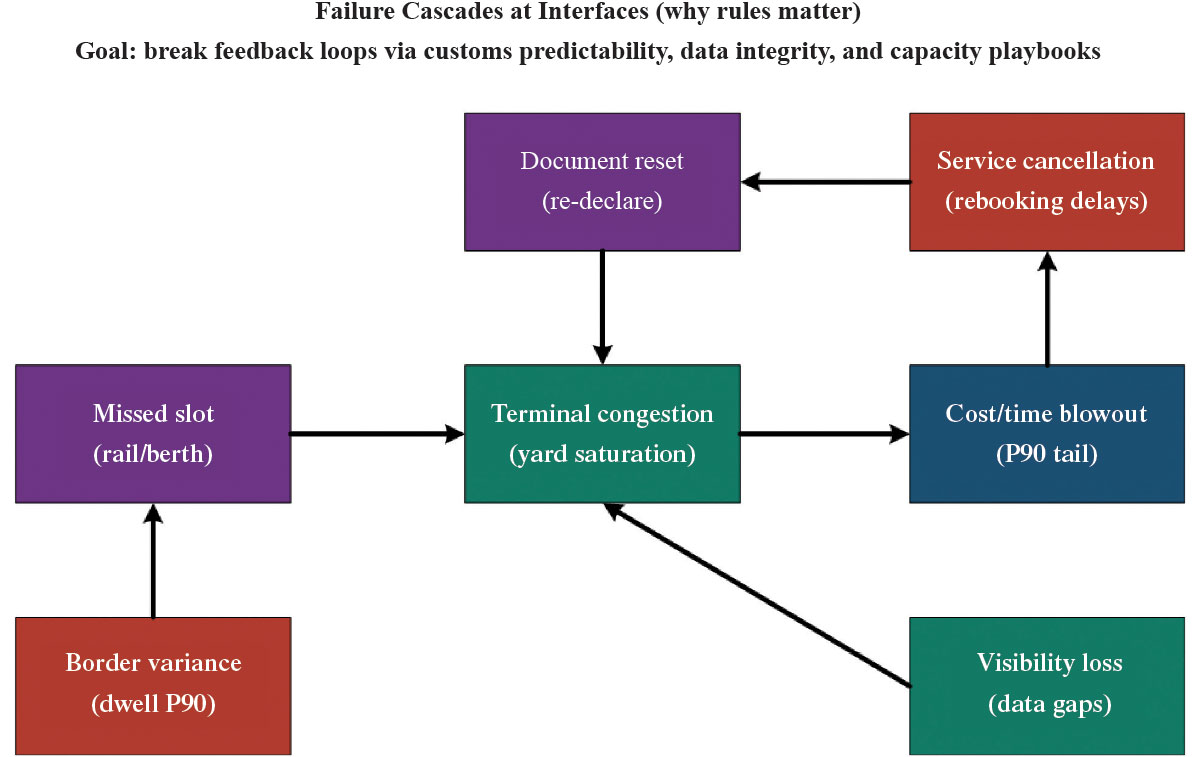
Table 2. Interface failure modes, observable symptoms, and governance fixes (Source: Author synthesis; intermodal process emphasis supported by sea–rail system analysis literature and corridor governance discussions) (Wagener et al., 2020)
|
Interface |
Typical failure |
Observable KPI symptom |
Root governance cause |
Fix category |
|---|---|---|---|---|
|
Port gate / berth |
Cargo bunching; yard saturation |
Increased variability in port dwell time (P90) |
Lack of transparent slot allocation rules |
Capacity governance + KPI monitoring |
|
Port–rail transfer |
Missed train–vessel connections |
Increased rebooking time |
Absence of coordinated operational playbook |
Capacity coordination + data interoperability |
|
Dry port gate |
Customs rework at inland nodes |
Increased document error rate |
Inconsistent data standards across actors |
Data standardisation + document harmonisation |
|
Border clearance |
Inspection variability |
Increased border dwell time (P90) |
Misaligned or non-harmonised risk management rules |
Customs coordination + data alignment |
|
Mode switch |
Documentary reset at transfer points |
Increased re-declaration rate |
Absence of interoperable document continuity mechanisms |
Document interoperability + process standardisation |
4. The Governance Toolkit: Rules that Make Rail–Sea Substitutable in Practice
The governance problem can be stated with precision: a trans-Eurasian system is resilient only when rail and maritime transport function as real options. Options are only meaningful when switching costs are controlled, and those costs are primarily determined by rules governing coordination, customs facilitation, documentation, data governance, and capacity allocation. This section specifies an initiative-agnostic, standards-anchored toolkit that can be adopted across diverse jurisdictions without being perceived as politically exclusive.
The first component is a corridor coordination mechanism focused on measurable performance rather than institutional branding. A practical model is a Corridor Performance and Interoperability Platform. Its membership should include customs and border agencies, port authorities and terminal operators, rail infrastructure managers and operators, shipping lines and forwarders, and a shipper council representing major cargo owners. Its mandate should be deliberately narrow but operationally decisive: to publish a corridor scorecard based on a limited set of key performance indicators (KPIs), to operate a disruption protocol defining authority chains and switching triggers, to maintain an interoperability roadmap for documentation and data, and to provide an escalation mechanism for operational disputes. The objective is not to establish a new supranational institution, but to institutionalise a routine governance channel through which technical rules are stabilised and performance is rendered transparent. Although the importance of corridor management is widely recognised in the rail literature, it is often left at a conceptual level rather than operationalised (Wagener et al., 2020).
Table 3. Corridor Governance Design Menu (Source: Author synthesis)
|
Model |
Strength |
Weakness |
Best-fit context |
Neutrality risk |
Effort |
|---|---|---|---|---|---|
|
Secretariat model |
Institutional continuity; KPI discipline |
Higher cost; political complexity |
Mature, high-volume corridors
|
Medium |
Medium–high |
|
Rotating chair model |
Political feasibility; inclusiveness |
Weak institutional continuity |
Early-stage coordination frameworks |
Low–medium |
Medium |
|
Public–private board |
Operational responsiveness; market alignment |
Requires high trust |
Pilot corridors and node-level implementation |
Low |
Medium |
The second component is customs facilitation structured around a simple but powerful principle: one dataset should be usable many times. The WTO Trade Facilitation Agreement frames the policy objective as expediting the movement, release, and clearance of goods—including goods in transit—through modernised and transparent procedures (WTO, 2017). For rail–sea synergy, the operational translation includes pre-arrival submission of a shared minimum dataset, risk-based controls with harmonised status codes, and predictability commitments measured through dwell-time distributions rather than anecdotal averages. Predictability is critical because it reduces the working capital and scheduling penalties that otherwise discourage mode switching.
Customs facilitation must also reflect the geography of control points. Inland clearance at dry ports can reduce seaport dwell time and create switching flexibility, but only if inland nodes are fully integrated into customs decision processes and data systems. At border hubs, alignment between customs decision logic and rail operating procedures is essential. Without such alignment, even well-funded infrastructure corridors can exhibit persistent variance, as inspections, document checks, and train path allocations interact in unpredictable ways.
The third component is documentary continuity for multimodal switching. When documentation must be reset at a modal interface, switching costs increase sharply and error risks multiply. Documentary continuity therefore becomes a key resilience lever. The CIM/SMGS common consignment note provides a practical mechanism to reduce friction at regime interfaces by avoiding the need to rewrite consignment notes at reconsignment points (CIT/OSJD, 2024). This should not be treated merely as a legal technicality; rather, it is a core element of resilience design. The objective is to preserve a continuous shipment identity, consistent party roles, and uninterrupted custody event records across rail–port–sea transfers.
Figure 3. "One dataset, many uses" end-to-end clearance flow (sea→port→rail / rail→port→sea) (Source: Author design and rendering)
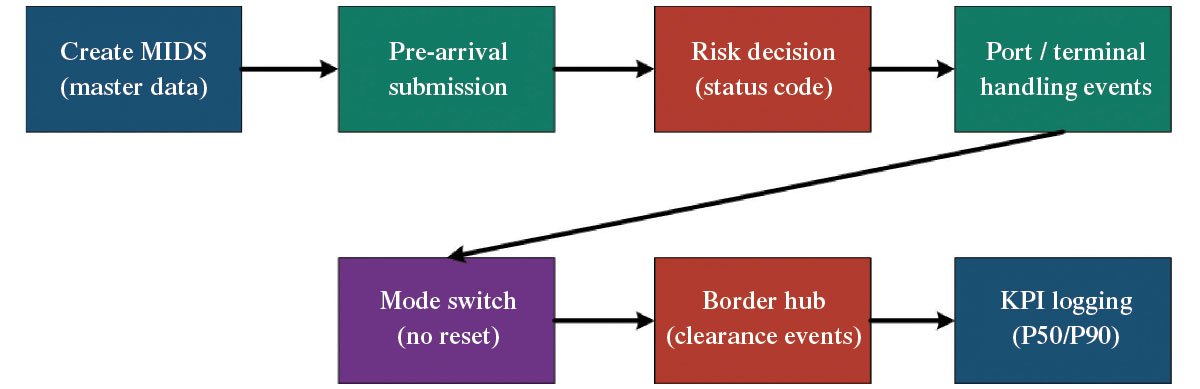
Table 4. Minimum documentary continuity checklist for mode switching (Source: Author synthesis)
|
Continuity element |
Why it matters |
Evidence artifact |
|---|---|---|
|
Shipment identity (container/seal ID) |
Prevents duplicate declarations |
Container ID + seal verification record |
|
Parties and roles |
Ensures liability clarity and customs accountability |
Role-coded party identifiers |
|
Custody transfer timestamps |
Enables dispute resolution |
Event logs with digital signatures |
|
Customs release status code |
Prevents rework |
Standardized status code |
|
Exception reason codes |
Reduces "black box" holds |
Harmonized code list |
The fourth component is digital interoperability treated explicitly as a governance problem, rather than solely as an information technology issue. Digitalisation is frequently invoked in corridor discussions, yet without standards anchoring it can exacerbate fragmentation by proliferating incompatible platforms. A workable approach is to define a Minimum Interoperable Data Set for corridor-wide visibility. This dataset should include stable identifiers—such as booking ID, container ID, and consignment references—alongside standardised event categories including gate-in, gate-out, departure, arrival, customs hold, customs release, and transshipment completion. It must be supported by governance rules specifying data ownership, authorised access, retention periods, audit requirements, and cross-border data-sharing constraints.
Standards anchoring is essential for credibility and scalability. The World Customs Organization (WCO) Data Model provides a harmonised framework for cross-border regulatory data exchange, particularly for customs and border agencies (WCO, 2023). Complementary frameworks developed by the United Nations and UNECE—including the Multimodal Transport Reference Data Model—aim to support multimodal interoperability and electronic corridor implementation (UNECE, 2023). A neutral corridor toolkit should therefore align its minimum dataset and event semantics with these widely recognised standards, rather than developing bespoke or proprietary formats.
Table 5. Data governance charter outline for a corridor minimum interoperable data set (Source: Author synthesis; standards anchoring supported by WCO and UNECE materials)
|
Data element |
Owner |
Permitted users |
Purpose |
Retention |
Cross-border constraint |
|
Container ID |
operator |
all corridor participants |
shipment tracking |
3–7 years |
permitted under agreed standards |
|
Customs status code |
customs authority |
operator/consignee |
clearance processing |
per national law |
shared code, not full dataset |
|
Gate timestamps |
terminal operator |
all corridor participants |
KPIs measurement |
3 years |
permitted |
|
Party identifiers |
shipper/forwarder |
customs/authorized agencies |
risk management |
per law |
role-based access control required |
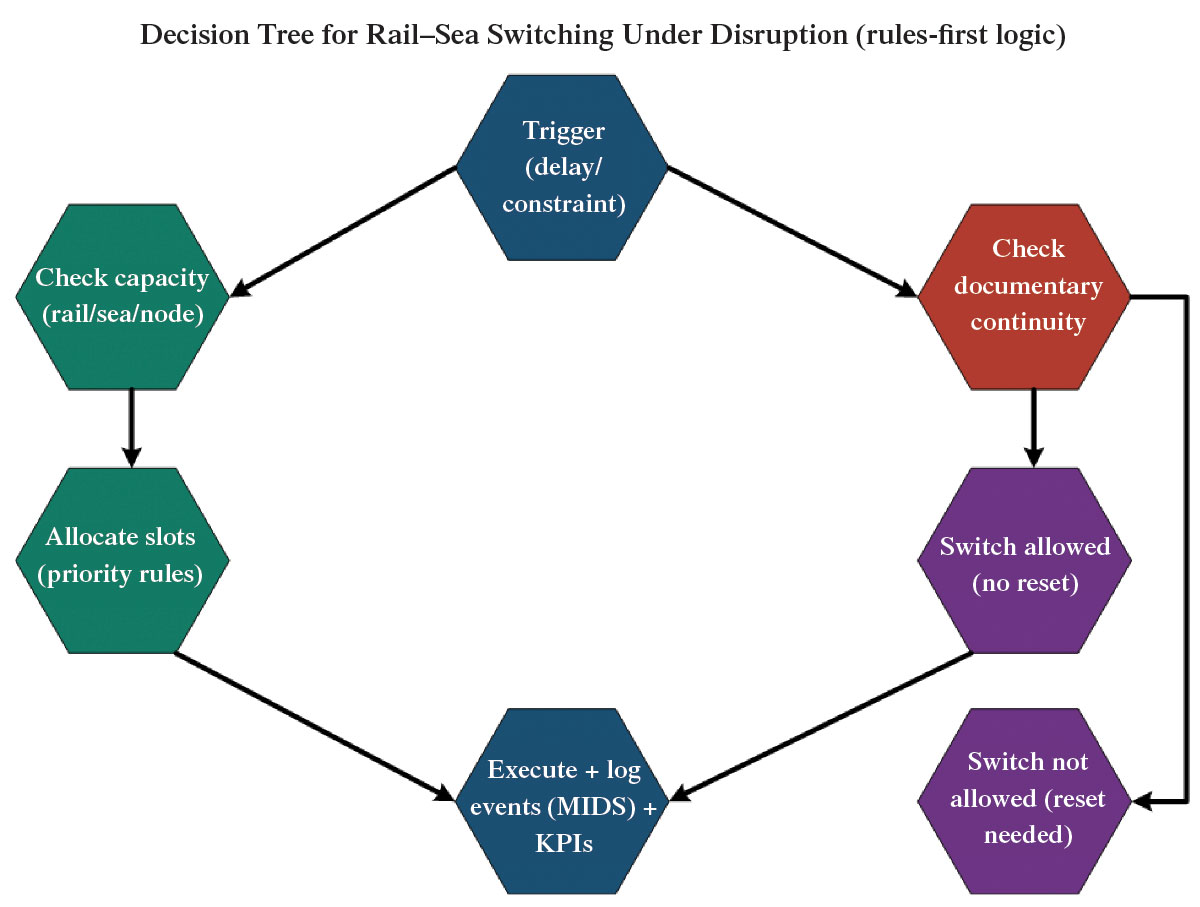
The fifth component is capacity allocation supported by a contingency switching playbook. Redundancy is only meaningful if capacity remains accessible under conditions of stress. In the absence of transparent rules, disruption tends to trigger informal rationing, leading to delays and erosion of trust. A corridor playbook should therefore define switching triggers, documentary continuity checks, and transparent, non-discriminatory priority rules linked to compliance status or service category rather than to initiative membership. It should also introduce a measurable rebooking time KPI, capturing the time required to reallocate a shipment from a constrained mode or corridor to an available alternative—expressed in hours from trigger event to confirmed capacity assignment. Pre-agreed and publicly communicated playbook rules are significantly more effective than ad hoc arrangements negotiated during crises, as they reduce uncertainty and limit opportunistic behaviour.
Figure 4. Mode-switch decision tree (trigger→data/doc; continuity→capacity; allocation→execute) (Source: Author design and rendering)
Finally, the toolkit must be measurable. Without KPIs that capture tail performance, corridor governance risks devolving into narrative rather than discipline. A parsimonious KPI set should include transit time (P50 and P90), border dwell (P50 and P90), port dwell (P50 and P90), on-time reliability, inspection rate, document resubmission rate, data error rate, cancellation rate, and rebooking time. These indicators are not merely operational metrics; they function as governance diagnostics, revealing whether the system is becoming more effectively substitutable under a stable and transparent rule framework.
5. Green Transition as a Corridor Governance Problem
Green transition pressures intersect directly with rail–sea synergy because they simultaneously increase the need for reliable emissions reporting and the strategic value of routing flexibility. However, green performance claims can easily become non-comparable across modes when system boundaries are inconsistent. Assertions that one mode is inherently "greener" than another are therefore insufficient for corridor governance, as emissions outcomes depend on multiple variable factors, including the electricity mix powering rail traction, terminal energy sources, vessel fuel pathways, and route distance. For high-level decision-makers, the central issue is thus not rhetorical comparison but auditability, consistency, and comparability across transport chains.
A corridor toolkit should therefore define a minimum viable emissions boundary for door-to-door multimodal logistics chains. This boundary should include rail traction energy consumption, maritime fuel use for the main voyage, and measurable port and terminal energy inputs. Emissions should be reported both per shipment and per unit of transport work, such as TEU-kilometre or tonne-kilometre. Given that operational variance is relevant for both resilience and emissions performance, the corridor should publish not only point estimates but also distributions, applying a P50 and P90 logic consistent with reliability metrics used elsewhere in the governance framework.
For methodological anchoring, the Global Logistics Emissions Council (GLEC) Framework provides a widely adopted standard for logistics emissions accounting and is designed to support ISO 14083-aligned calculations across multimodal transport chains, including logistics hubs (Smart Freight Centre, 2023). A corridor can adopt such a framework as a shared accounting language while maintaining institutional neutrality by applying consistent rules across all operators. This approach also strengthens digital interoperability: when a Minimum Interoperable Data Set captures reliable event timestamps and geospatial identifiers, it enables auditable activity-level emissions calculations. In this sense, the green transition does not substitute for governance discipline; rather, it reinforces the need for structured, standardised, and interoperable data systems.
Figure 5. Corridor-Level emissions boundary for rail-sea chains (schematic) (Source: Author design and rendering; method anchored to GLEC/ISO principles.10)
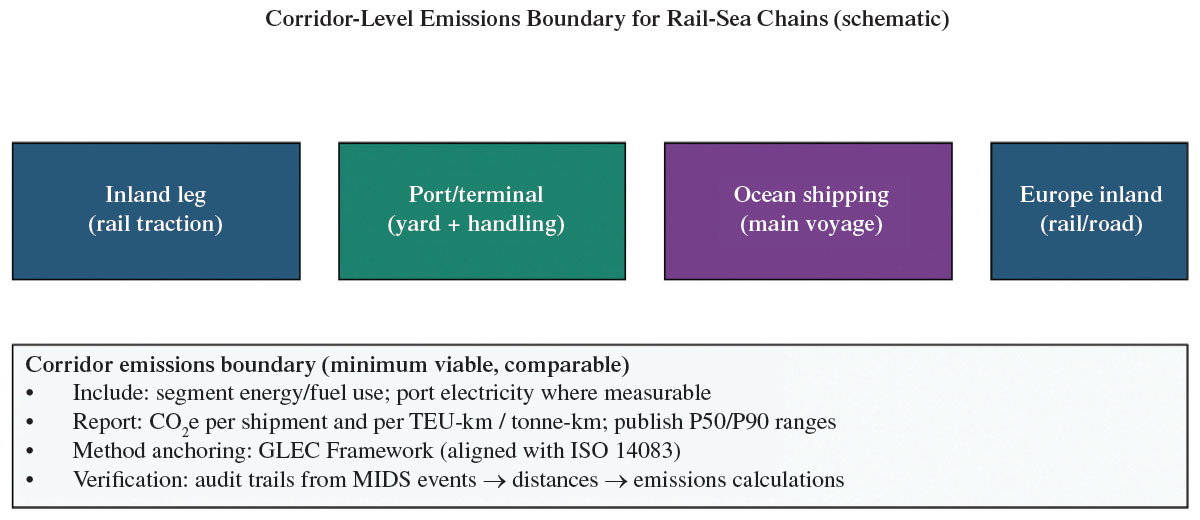
Table 6. Green governance levers that preserve neutrality (Source: Author synthesis; method anchoring supported by the GLEC Framework)
|
Lever |
Required data |
Verification mechanism |
Operational impact |
Neutrality safeguard |
|---|---|---|---|---|
|
Green lane |
MIDS and emissions report |
Audit and assurance process |
Accelerated clearance |
Criteria are published and non-discriminatory |
|
Priority windows |
Schedule and capacity utilization metrics |
KPI-based performance audit |
Reduced port and terminal dwell time (P90 improvement) |
Open access by performance |
|
Differentiated fees |
Emissions intensity per shipment |
Third-party verification |
Shifts demand |
Uniform application across all operators and corridors |
6. Stress Test: Three Disruption Scenarios and What the Toolkit Changes
A credible resilience framework must demonstrate performance under stress conditions rather than under steady-state assumptions. Three stylised disruption scenarios illustrate how the proposed governance toolkit alters system behaviour.
In the first scenario, a land corridor experiences disruption due to geopolitical or regulatory constraints. Without synergy mechanisms, cargo owners face abrupt and inefficient transitions to maritime alternatives, often accompanied by documentary resets, unpredictable border delays, and informal capacity rationing that favours incumbents. With the governance toolkit in place, switching becomes procedural rather than improvisational. Documentary continuity reduces the need for re-declaration, pre-arrival submission and harmonised status codes reduce border variance, and the corridor performance platform provides transparent congestion indicators and rebooking time estimates, thereby reducing panic-driven overreaction.
In the second scenario, a maritime chokepoint disruption increases transit time and variance. In the absence of coordination mechanisms, diversion leads to cascading port congestion and inland spillovers, compounded by fragmented data visibility. With the toolkit, part of the cargo portfolio can be systematically reallocated to rail services under predefined switching triggers. Minimum dataset standards preserve end-to-end visibility, while pre-arrival customs processing maintains clearance predictability. The key improvement is the control of tail risk: rebooking time is measurable, capacity allocation rules are predefined, and visibility is preserved, thereby preventing congestion spirals.
In the third scenario, demand surges and terminal congestion generate systemic reliability degradation. Without governance, terminals rely increasingly on manual interventions, data quality deteriorates, customs risk profiles become more conservative, and congestion tails reinforce themselves. With the toolkit, early warning signals are captured through KPI monitoring, slot allocation rules and disruption playbooks reduce ad hoc rationing, and data governance preserves operational visibility even under stress. In this scenario, the primary benefit is not redundancy but robustness: the system avoids collapsing into a low-information, high-delay equilibrium.
Table 7. Scenario by mechanism matrix (Source: Author synthesis)
|
Scenario |
CPIP KPIs |
Customs package |
Data governance |
Capacity playbook |
Green rules |
|---|---|---|---|---|---|
|
S1 land corridor constrained |
High |
High |
High |
High |
Medium |
|
S2 maritime chokepoint disruption |
High |
Medium |
High |
High |
Medium |
|
S3 terminal congestion surge |
High |
High |
High |
High |
Low–medium |
7. Strategic Outlook and Implementation Roadmap
Trans-Eurasian logistics networks are likely to evolve along four structural trajectories that further strengthen the case for a governance-centric synergy model. First, increasing geopolitical and regulatory fragmentation will elevate the importance of interoperability, with competitiveness determined not only by cost and time but also by the credibility of operational rules and data transparency. Second, ports will increasingly function as integrated data and energy hubs, shifting their role from throughput optimisation to corridor-level resilience management. Third, inland hubs and dry ports will gain importance as buffering mechanisms that redistribute congestion, enable inland clearance, and expand switching opportunities closer to demand centres. Fourth, the adoption of neutral, standards-based frameworks will become the lowest-friction pathway for cross-jurisdictional cooperation, as they reduce political barriers while improving technical compatibility.
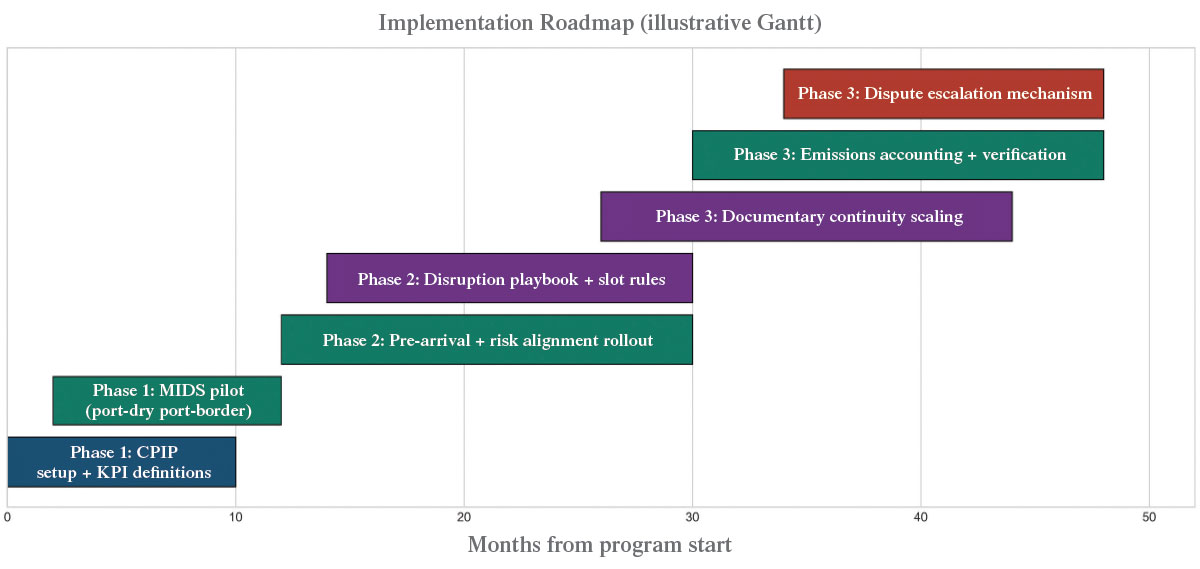
Implementation should proceed in phased and measurable stages. In the first phase (approximately twelve months), a pilot corridor should be established linking one port, one dry port, and one border hub. A lightweight corridor performance platform should be launched, baseline KPIs should be defined, and initial performance distributions (P50 and P90) should be published. A Minimum Interoperable Data Set should be introduced for event tracking, and pre-arrival customs submission should be tested on a limited shipment cohort. This phase is most effectively led by a port authority or national railway working group with a mandate to deliver a publicly accessible performance baseline within one year.
In the second phase (one to three years), the data model should be expanded across additional nodes, pre-arrival processing should become standard practice, and a formal disruption playbook should be introduced with transparent switching triggers and rebooking protocols. Documentary continuity mechanisms should be scaled through interoperable consignment and event reference standards at key modal interfaces. The KPI scorecard should be used to identify structural weaknesses, including persistent dwell time tails or elevated data error rates. Coordination at this stage is best supported by a corridor-level secretariat or multilateral working group, leveraging shared reference frameworks such as the WTO Trade Facilitation Agreement, the WCO Data Model, and CIM/SMGS documentation standards.
In the third phase (beyond three years), the corridor platform should institutionalise dispute resolution mechanisms, integrate emissions accounting into governance routines, and introduce verification systems supporting credible green performance claims. Incentive structures—such as priority windows or green lanes—can then be linked to verified performance outcomes, ensuring neutrality by basing access on compliance rather than institutional affiliation. At this stage, integration with broader regional regulatory architectures, including EU rail corridor frameworks, customs unions, or intergovernmental transport agreements, becomes both feasible and necessary to ensure legal durability and institutional continuity beyond initiative-level governance.
Figure 6. Implementation roadmap (Source: Author design and rendering)
The success condition for this roadmap is credibility. Credibility depends on transparency, auditability, and non-discrimination. Customs authorities benefit through improved risk targeting and reduced data errors; ports benefit from reduced congestion volatility; operators benefit from lower switching friction and predictable rebooking; shippers benefit from increased option value under disruption; and financiers benefit from reduced operational uncertainty when performance is measurable rather than narrative. These incentives align only if the corridor platform publishes comparable KPIs and if underlying event data is standardised, interoperable, and auditable across all participating nodes.
8. Conclusion
China–Europe rail services and maritime shipping should not be evaluated primarily through a substitution framework. Under conditions of geopolitical uncertainty and accelerating green transition pressures, their strategic value lies instead in synergy—namely, the capacity to allocate cargo dynamically across modes and to switch between them with minimal administrative and informational friction.
The binding constraints on such flexibility are not located in line-haul infrastructure but are concentrated at critical interface points, where governance determines whether theoretical redundancy can be transformed into operationally usable options. Ports, dry ports, and border hubs function as control points at which customs procedures, documentation continuity, data interoperability, and capacity allocation jointly determine system performance.
Accordingly, this article has proposed a neutral, standards-anchored governance toolkit comprising corridor performance platforms, "one dataset" customs facilitation, documentary continuity mechanisms, interoperable data governance frameworks, transparent capacity allocation playbooks, and harmonised corridor-level emissions accounting. Together, these instruments are designed to reduce failure cascades and improve tail performance under conditions of stress and disruption.
In trans-Eurasian connectivity systems, resilience is not an abstract attribute declared at the level of strategy. It is produced operationally at interfaces and control points, where rules either enable or inhibit the conversion of redundancy into real, executable options.
- Chen, H., Yi, Z. (2021). Analysis of Port Container Sea‑Rail Intermodal Transportation System. Journal of Physics: Conference Series, 2005: 012036. https://doi.org/10.1088/1742-6596/2005/1/012036
- CIT/OSJD. (2024). CIM/SMGS Consignment Note Manual (GLV‑CIM/SMGS), Edition 4. Bern: CIT/OSJD.
- International Rail Transport Committee (CIT), Organisation for Co-operation between Railways (OSJD). (2024). CIM/SMGS Consignment Note Manual (GLV‑CIM/SMGS), Edition 4. Bern: CIT/OSJD.
- Smart Freight Centre. (2023). GLEC Framework for Logistics Emissions Accounting and Reporting, Version 3. Amsterdam: Smart Freight Centre.
- UNECE. (2023). Multimodal Transport Reference Data Model—Technical Specification. https://unece.org/trade/uncefact
- United Nations Conference on Trade and Development. (2023). Review of Maritime Transport 2023: Towards a Green and Just Transition. Geneva: United Nations Conference on Trade and Development.
- Wagener, N., Aritua, B., Zhu, T. (2020). The New Silk Road: Opportunities for Global Supply Chains and Challenges for Further Development. LogForum 16(2): 281–295. https://doi.org/10.17270/J.LOG.2020.397 [Updated data for 2023: National Development and Reform Commission, China Railway, reported in industry press.]
- World Bank. (2019). Belt and Road Economics: Opportunities and Risks of Transport Corridors. Washington, DC: World Bank. https://doi.org/10.1596/978-1-4648-1392-4 [Note: Cited only for the policy-label context; this article uses neutral terminology throughout.]
- World Customs Organization. WCO Data Model—Overview and eHandbook, Version 3.12. https://www.wcoomd.org/en/topics/facilitation/instrument-and-tools/tools/data-model.aspx
- World Trade Organization. (2017). Agreement on Trade Facilitation. https://www.wto.org/english/docs_e/legal_e/tfa-nov14_e.htm